




There's a detail that connects the cheese to a bigger, less-told story: it was precisely the depopulation of the Plateau during the First World War — when this territory became the front line — that pushed the production of Asiago cheesealso toward the foothill areas and the plain. Here, even the food bears the marks of war.
And it's here that the story led us to something closer to these places: the tales of Mario Rigoni Stern. Stern didn't fight in the Great War, but he grew up amid its traces: a woodsman, a hunter, a tireless walker of these trails, he told the
story of the Plateau his whole life, weaving together the memory of war with the story of nature and simple mountain life.
The nature, history, and stars of the Vicenza mountains
An adventure experienced together with the Filippi Team
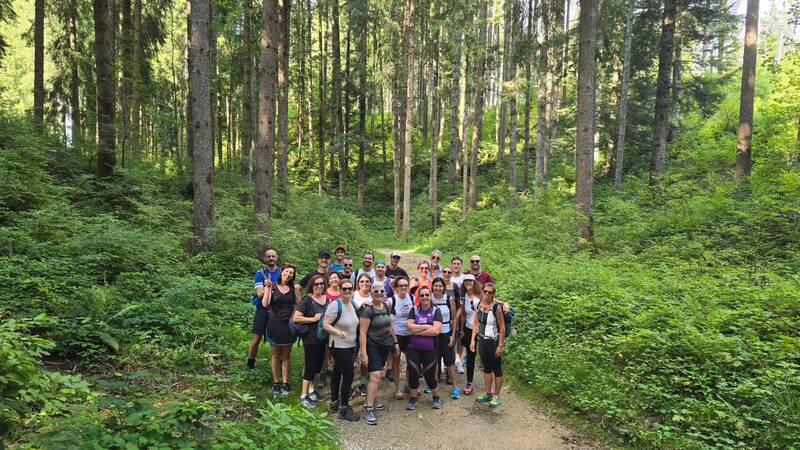
On July 17th, the whole Pasticceria Filippi Team set off together for a full day, without working. It's called team building, but for us it was above all about sharing: two cars made available by the owners, the rest organized among colleagues,
and a whole afternoon to spend together, away from the routine.
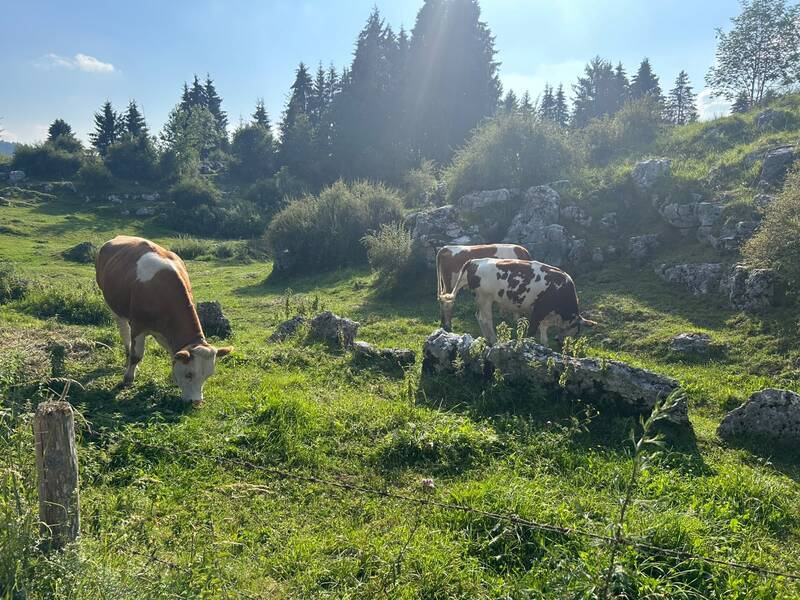
Asiago, to most people, is known for its cheese. A story that goes back a long way: the first traces date back to the year 1000, when "pegorin," a sheep's milk cheese, was produced here. A DOP product that carries the name of the plateau itself.
-
-
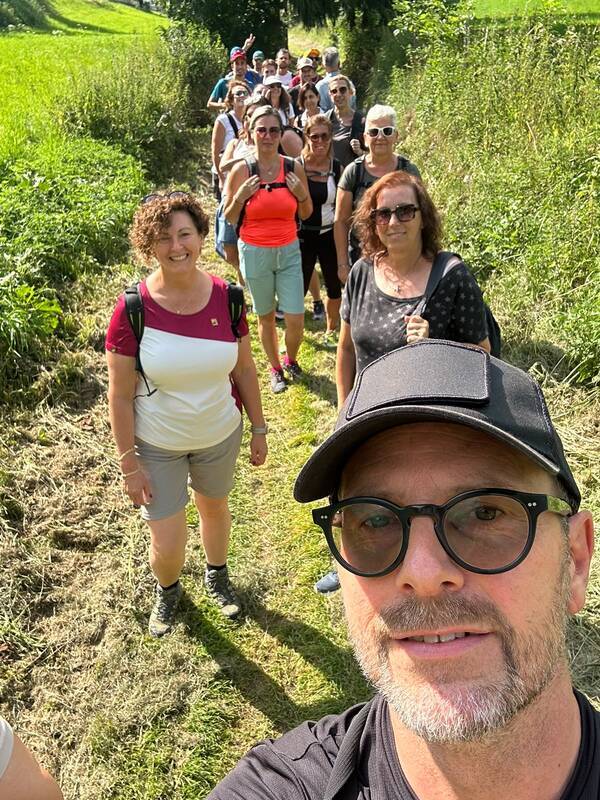 Among the places he walked through and described many times is the Barenthal woods — the Valley of the Bear — south of Asiago, where our group ventured during the hike. It was here that in 1918, after the defeat at Caporetto, the British armyarrived to help the Italian one, clashing with the Austro-Hungarian troops.
Arriving instead at the Pennar area, opposite the Barenthal, we can't help but recall Emilio Lussu's "Un anno sull'altopiano" ("A Year on the Plateau"), one of the most important works of Italian literature on the Great War.
Lussu was an officer in the Sassari Brigade, and the book recounts exactly the months between June 1916 and July 1917, when his regiment, made up almost entirely of Sardinian soldiers, fought right here on these mountains, between Monte Fiorand Monte Zebio.
Here you can still find the former headquarters of the 151st Regiment of the Sassari Brigade, and a military cemetery dedicated to that very brigade: land given by the Municipality of Asiago to the Region of Sardinia.
Even today, along several stretches of the Altopiano's Great War trails, remains of that conflict can be found. Here, nature coexists with memory: fir trees and high-altitude pastures grow alongside trenches dug more than a hundred years ago. -
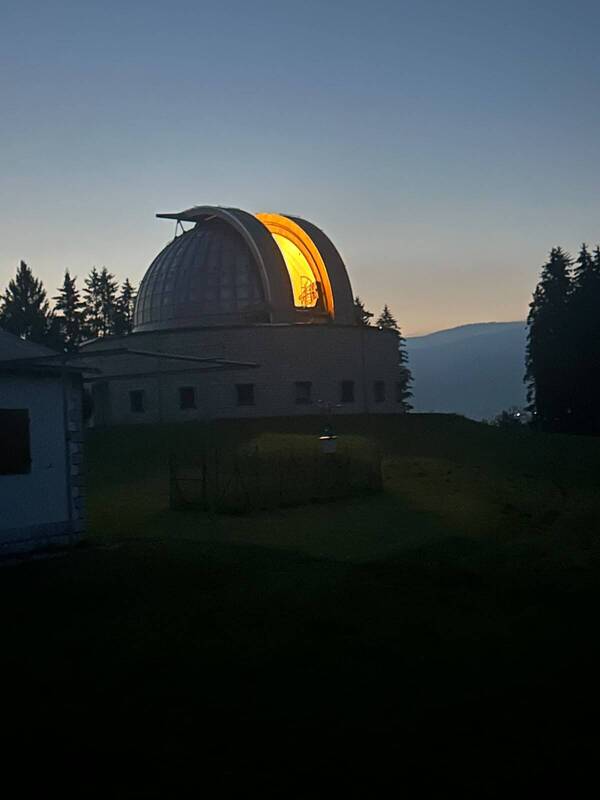 We closed the day looking at the stars, at the Asiago Astrophysical Observatory, founded in 1942 by the University of Padua and still today among the most important in Italy.
Looking at the sky creates wonder, something we now need so much.
That beauty must be preserved. And there's no stronger push toward our sustainability mission than this: understanding that we're part of a single environment — the land that gives milk for cheese, the woods that still hold the memory of humankind, the sky above our heads. There are no boundaries between these things.
There is only one territory, and the responsibility to take care of it.